Comparing SpaceX Starship vs. NASA SLS: Which Rocket Wins for Lunar Travel?
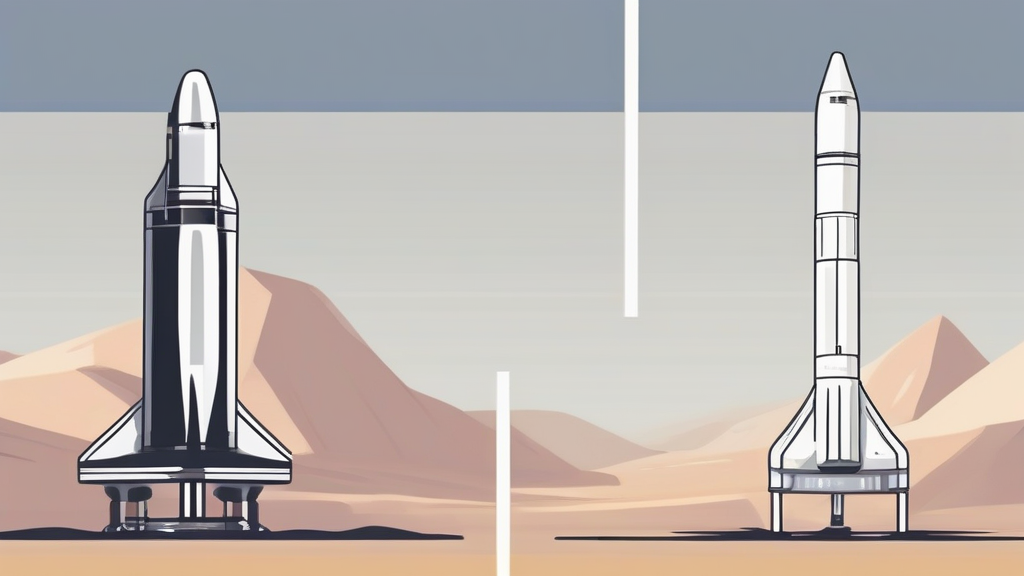
When we look at the stars, we often wonder which vehicle will carry us back to the lunar surface. NASA's Moon Mission: The latest space exploration project entering a crucial phase, represents a pivotal moment in human history. As an observer of aerospace trends, I find the rivalry between the public sector’s heritage hardware and the private sector’s rapid iteration models fascinating. We are witnessing a clash of philosophies, budgets, and engineering goals that will define the next century of space flight.
Key Takeaways
- NASA’s Space Launch System (SLS) prioritizes proven reliability and mission-critical safety for the Artemis program.
- SpaceX’s Starship offers unparalleled payload capacity and cost efficiency through its fully reusable design.
- The success of lunar exploration depends on a synergy between government oversight and private sector innovation.
The Philosophy of NASA's Moon Mission: SLS
The Space Launch System, or SLS, is the backbone of the Artemis program. It is a super-heavy-lift expendable launch vehicle, designed with a conservative engineering approach. When you think of SLS, think of it as the spiritual successor to the Apollo-era Saturn V. It is built to be a workhorse, designed to carry the Orion spacecraft with absolute precision.
Why does NASA stick to this traditional path? It comes down to risk mitigation. When you are launching humans into deep space, "move fast and break things" isn't a popular mantra. SLS leverages existing infrastructure and flight-proven components to ensure that the heavy lifting of the initial lunar return is handled by a platform that NASA understands inside and out.
Why Reliability Matters for Crewed Flight
The primary advantage of the SLS is its pedigree. It utilizes solid rocket boosters and liquid-fueled core stages that draw from decades of shuttle and Apollo experience. For a government agency, this reliability is the gold standard. When you are managing a multi-billion dollar budget, the political and safety costs of a launch failure are astronomical.
However, this stability comes with a heavy price tag. Each launch costs billions of dollars, a figure that makes even the most ardent space enthusiasts wince. It is an exquisite piece of machinery, but it is not designed to be reused. Once the mission is over, those expensive components are left to burn up in the atmosphere or sink into the ocean.
The Disruptive Nature of SpaceX Starship
Then we have the contender from the private sector: the SpaceX Starship. This vehicle is a radical departure from everything we have seen before. It is built from stainless steel, not the expensive composites typical of aerospace. Its goal is simple: total and rapid reusability. If SpaceX succeeds, the cost of putting mass into orbit could drop by several orders of magnitude.
Watching Starship test flights is a visceral experience. You see the sheer scale of the Starship launch vehicle and the ambition behind it. It is designed to be refueled in orbit, which is a game-changing capability for missions headed to the Moon or even Mars. This orbital refueling is the secret sauce that makes Starship a lunar lander candidate.
The Economics of Reusability
The business model for Starship is fundamentally different. By reusing the entire rocket, SpaceX aims to turn space travel into something akin to airline logistics. If you can land a booster and a ship, check them over, and fly them again within days, the economics of space exploration shift completely.
For business owners and investors looking at the future of the space economy, Starship is the clear winner on paper. It lowers the barrier to entry for everything from satellite constellations to lunar cargo delivery. But, it is still in the developmental phase. It has not yet flown a crewed mission to the Moon, and the engineering challenges of orbital refueling are immense.
Comparing Performance and Capabilities
When we weigh these two giants, we have to look at the metrics that matter. SLS is built for the "direct injection" approach. It can throw the Orion capsule toward the Moon with enough energy to get there in a few days. It is a specialized tool for a specific, high-stakes job.
Starship, conversely, is a general-purpose heavy lifter. It doesn't have the same "throw weight" in a single shot as the SLS, but it compensates with its ability to launch multiple times and refuel in orbit. This creates a virtual "gas station" in space, allowing for much larger payloads to be moved to the lunar surface than the SLS could ever manage on its own.
Which Rocket Wins the Race?
If the goal is to get humans back to the lunar surface within the current timeline, NASA needs both. The SLS will carry the crew, while Starship will likely serve as the lunar lander. It’s not necessarily a "winner takes all" scenario; it’s a partnership.
The real question for the future is whether Starship will eventually make the SLS obsolete. As Starship matures, the need for a non-reusable, multi-billion-dollar rocket may diminish. But for the next few years, NASA’s Moon Mission: The latest space exploration project entering a crucial phase, relies on the reliability of the SLS to provide the stability that the public and Congress demand.
Addressing the Challenges Ahead
We shouldn't ignore the hurdles. Both systems face significant technical risks. For SLS, the risk is cost-overruns and the sheer difficulty of maintaining a supply chain for aging hardware. For Starship, the risk is the complexity of the landing, the heat shield integrity, and the sheer number of successful flights required to certify it for human passengers.
I believe that the private sector is currently setting the pace. The speed at which SpaceX iterates is forcing NASA to become more agile, even if they are constrained by bureaucracy. This pressure is exactly what the industry needed to move beyond the stagnation that followed the retirement of the Space Shuttle.
Conclusion
Choosing between Starship and SLS is like choosing between a vintage luxury car and a prototype electric supercar. One is proven, comfortable, and safe, but inefficient. The other is fast, revolutionary, and potentially dangerous, but points toward a future where space travel is accessible to more than just government astronauts.
Ultimately, the "winner" is humanity. We are entering an era where returning to the Moon is not just a political stunt, but a sustainable step toward living and working in space. Whether it is the reliability of NASA’s SLS or the bold innovation of SpaceX’s Starship, both are essential players in the story of our expansion into the solar system.
Frequently Asked Questions (FAQ)
Is SpaceX Starship safer than NASA's SLS?
Currently, SLS is considered safer for crewed missions because it uses flight-proven technology and has a rigid, government-mandated safety certification process. Starship is still in development and must undergo rigorous testing before it is certified for human flight.
Why does NASA still use the SLS if it's so expensive?
NASA uses the SLS because it provides a reliable, high-thrust platform that can launch the Orion capsule directly to the Moon. It allows the agency to leverage existing manufacturing infrastructure and maintain a predictable schedule for critical national space objectives.
Can Starship replace the SLS entirely?
In theory, yes. If Starship achieves full, rapid reusability and demonstrates consistent safety for human passengers, it could theoretically perform all the missions currently assigned to the SLS at a fraction of the cost. However, this remains a long-term goal rather than an immediate reality.
Post a Comment for "Comparing SpaceX Starship vs. NASA SLS: Which Rocket Wins for Lunar Travel?"