What Happens to Moon Rocks Brought Back to Earth? A Look Inside the Labs
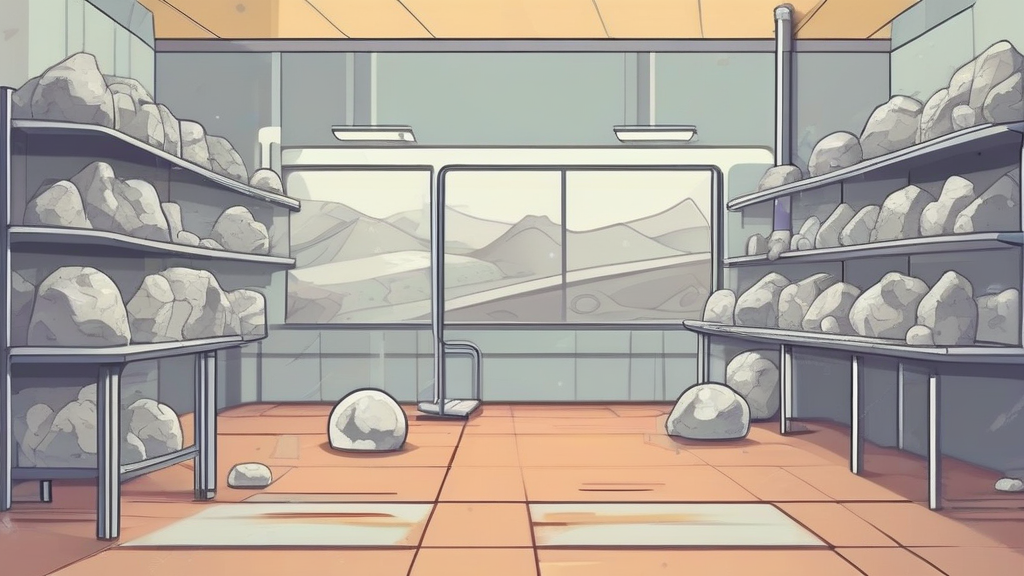
When we talk about NASA's Moon Mission: The latest space exploration project entering a crucial phase, most people focus on the rockets and the astronauts. But the real treasure isn't just the journey—it’s the cargo coming home. Have you ever wondered what happens to those dusty, grey rocks once they are plucked from the lunar surface and dropped into our atmosphere?
It turns out, the moment these samples touch down, they enter a world that makes a hospital operating room look like a messy garage. Protecting these extraterrestrial treasures from Earth’s contamination is a massive undertaking that involves some of the most sophisticated technology on the planet.
- Lunar samples are stored in specialized vacuum-sealed containers to prevent chemical contamination from our atmosphere.
- Scientists utilize cleanrooms and robotic manipulation to study the rocks without human contact.
- A significant portion of the collection is kept in long-term storage to be studied by future generations with better technology.
The Journey from Lunar Surface to Lab
Getting a rock from the Moon to a lab is a logistical nightmare. Once the samples are collected, they are sealed in containers that maintain a lunar-like environment as much as possible. This is vital because our air is thick with oxygen and moisture, both of which would instantly ruin the pristine chemistry of a moon rock.
Upon arrival, the samples are whisked away to the Lunar Sample Laboratory Facility at the Johnson Space Center. This isn't just a warehouse; it is a fortress designed to keep the universe’s secrets safe from our own environment. Every single gram is accounted for, tracked, and stored with religious precision.
Handling the Samples in NASA's Moon Mission: The Latest Space Exploration Project Entering a Crucial Phase
You might imagine a scientist in a white coat picking up a rock with tweezers. That is absolutely not how it works. Because even a tiny flake of skin or a breath of air could taint the sample, scientists use "gloveboxes." These are pressurized, sealed chambers where the researcher puts their hands into heavy-duty gloves attached to the glass walls.
It is a slow, methodical process. The goal is to keep the samples in their original state while performing initial analysis. They look for everything from geology markers to traces of water or organic compounds that might tell us how the solar system formed billions of years ago.
Why Do We Keep So Much of It?
People often ask why we don't just put all the rocks under microscopes the second they arrive. The answer is simple: technology improves. If we used all the samples in 1970, we would have missed out on the advanced mass spectrometry and imaging tools we have today.
NASA intentionally sets aside a large percentage of the returned material. This "curated" collection is the scientific equivalent of a savings account. By waiting, we allow future scientists to solve mysteries that we haven't even thought to ask yet. It is a long-term investment in our collective knowledge of space.
The Role of Research Labs
Beyond the primary storage facility, small slivers of these rocks are sent to universities and private research labs around the world. These researchers have to apply for a "loan" of the material. They must prove that their proposed experiments are worth the risk of handling such precious cargo.
The process is incredibly strict. If a researcher loses even a milligram of material, it is a major incident. These rocks are finite, and once they are broken down for analysis, they cannot be replaced. The pressure on these scientists is immense, but the data they provide is what keeps the engine of discovery running.
What Have We Learned So Far?
The rocks have told us stories that textbooks couldn't dream up. We’ve discovered that the Moon likely formed from a massive collision between Earth and a Mars-sized body. We’ve also found that there is more water locked in the lunar soil than we ever suspected, which changes how we think about future human colonies.
Every new mission adds another layer to this story. As we prepare for the next steps in human exploration, the lab work becomes even more important. We aren't just looking at rocks anymore; we are looking at the blueprints for our future survival in space.
Frequently Asked Questions (FAQ)
Can ordinary people see these moon rocks?
Yes, many museums and science centers house displays of lunar samples. While you can't hold them, these exhibits are often the best way to get a close look at history.
Are moon rocks dangerous to handle?
They are generally inert, but they are incredibly abrasive. Lunar dust is like crushed glass, which can damage equipment and irritate human lungs if inhaled.
How does NASA ensure the samples don't get mixed up?
Every sample is assigned a unique identifier, and its history is tracked in a database from the moment it is collected on the lunar surface until it is returned to the vault.
The work happening in these labs is the silent partner to every successful launch. While the rockets get the glory, the real progress happens in the quiet, sterile rooms where we carefully unwrap the past to build our future. If you want to stay updated on these findings, keep an eye on the latest publications from the planetary science community. The next great discovery might just be sitting in a box, waiting for the right tool to reveal its secrets.
Post a Comment for "What Happens to Moon Rocks Brought Back to Earth? A Look Inside the Labs"