The Top 5 Technological Innovations Powering NASA's Lunar Gateway
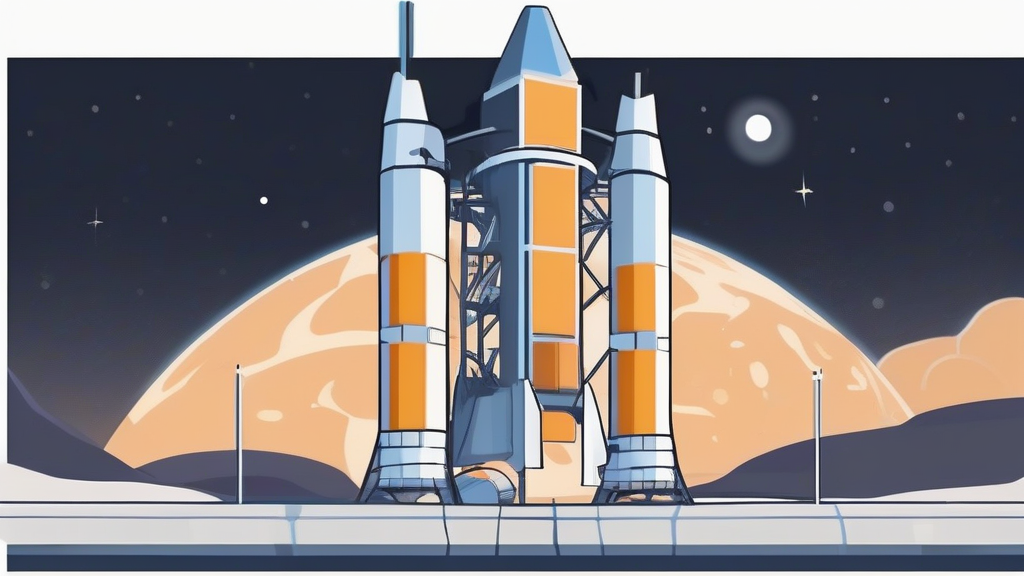
We are witnessing a monumental shift in how humanity approaches deep space, and NASA's Moon Mission: The latest space exploration project entering a crucial phase is at the absolute center of this transformation. As someone who has spent years tracking aerospace developments, I find the Lunar Gateway to be the most ambitious piece of engineering since the Apollo era. It is not just a station; it is a permanent outpost designed to keep us on the Moon and eventually push us toward Mars.
- The Gateway serves as a reusable command module, allowing for long-term lunar surface exploration.
- Advanced solar electric propulsion provides unprecedented efficiency for orbital maneuvers.
- International collaboration and modular design ensure the station can evolve with future mission requirements.
The Vision Behind the Gateway
Why build a station in orbit around the Moon instead of just flying straight to the surface? The answer lies in sustainability. By creating a staging point, we gain the ability to launch multiple missions without the massive fuel requirements of a direct-from-Earth trajectory. This approach changes the math of space travel entirely.
This is not just about planting flags anymore. It is about creating a robust infrastructure that supports a lunar space station that can act as a laboratory, a communications hub, and a home away from home. The engineering challenges are immense, yet the solutions being implemented today are nothing short of brilliant.
1. Solar Electric Propulsion (SEP)
Traditional chemical rockets are great for getting off the ground, but they are inefficient for long-term orbital adjustments. The Gateway utilizes high-power solar arrays to generate electricity, which then powers Hall-effect thrusters. This system accelerates xenon gas to incredible speeds, providing a continuous, low-thrust push that is vastly more fuel-efficient than conventional engines.
Because it is so efficient, we can keep the station in a unique "Near-Rectilinear Halo Orbit." This specific orbit allows the station to maintain a stable line of sight with Earth while staying close enough to the lunar south pole for rapid descent missions. It is a perfect marriage of physics and logistics.
2. Advanced Radiation Shielding
Deep space is a hostile environment. Beyond the protective magnetic field of Earth, astronauts face the constant threat of solar particle events and cosmic rays. Protecting the crew is not just a safety requirement; it is the primary hurdle for long-duration missions.
Engineers are integrating hydrogen-rich materials into the station's walls, as these are highly effective at slowing down high-energy particles. By utilizing the water supplies and food storage as additional shielding layers, the design team has managed to create a "storm shelter" within the habitat. This ensures that even during intense solar activity, the crew remains safe.
3. Autonomous Systems and AI
When the Gateway is uncrewed—which will be most of the time—it must look after itself. We are talking about a complex machine that needs to monitor its own health, manage power distribution, and handle thermal regulation without a human hand on the joystick. This is where artificial intelligence becomes a critical partner.
The onboard systems can identify anomalies before they become critical failures. If a valve sticks or a solar array panel encounters a micro-meteoroid, the system can reroute power or adjust orientation autonomously. This self-healing capability is essential for a station that operates thousands of miles from the nearest repair shop.
4. Modular Docking Interfaces
The Gateway is being built piece by piece, launched on different rockets, and assembled in space. To make this possible, NASA developed the International Docking System Standard. This isn't just a fancy latch; it is a universal interface that allows different spacecraft—from commercial cargo ships to international crew vehicles—to dock securely.
This modularity is a massive win for the future of space commerce. By standardizing the connection, NASA opens the door for private companies to contribute modules or supply the station. It creates a plug-and-play environment that encourages innovation from both government and private sectors.
5. Regenerative Life Support
You cannot carry enough oxygen and water from Earth to support a permanent crew for years. The Gateway features a closed-loop life support system that recycles air and water with near-total efficiency. Every drop of moisture, from sweat to urine, is captured, filtered, and purified back into potable water.
This technology is the bridge to Mars. If we can master these systems in the harsh environment of lunar orbit, we can eventually transport that same technology to the Red Planet. It is about creating a circular economy in space where nothing is wasted and everything is reused.
Why NASA's Moon Mission Matters Now
We are currently in a period where public and private interests are aligning like never before. The Gateway is the cornerstone of this transition. It proves that we can move beyond short-term exploration and establish a lasting presence in the solar system.
For business owners and tech enthusiasts, the Gateway represents a new market. The technologies being developed here—robotics, advanced materials, and AI—will inevitably find their way into our daily lives. Just as the Apollo missions gave us modern computing, the Gateway will likely trigger a wave of advancements in sustainability and automation.
The Future of Lunar Exploration
As we look toward the next decade, the Gateway will become the busiest intersection in space. It will be the place where international crews meet, where scientific experiments are conducted, and where the next generation of explorers will train for the journey to Mars. We are not just visiting the Moon; we are building the infrastructure for a multi-planetary future.
Frequently Asked Questions (FAQ)
How does the Lunar Gateway support Mars missions?
The Gateway acts as a testing ground for life support systems, deep-space radiation shielding, and long-term autonomous operations, all of which are essential for the much longer journey to Mars.
Can private companies use the Lunar Gateway?
Yes, the Gateway is designed with standardized docking interfaces to allow for international and commercial participation, fostering a collaborative ecosystem for lunar research and development.
What makes the Lunar Gateway's orbit so special?
The Near-Rectilinear Halo Orbit provides a stable, fuel-efficient path that keeps the station in constant communication with Earth while allowing easy access to the lunar surface for landers.
Post a Comment for "The Top 5 Technological Innovations Powering NASA's Lunar Gateway"